


At Learning from the Bees, you are invited into a living, embodied experience that brings together wide-ranging disciplines and traditions: from science and conservation to apiculture, the humanities, ancestral wisdom, history, and the arts. This illuminating and impactful program, interwoven with shared meals and celebration, will create a transformational experience.
We will come together to unify a dispersed community of diverse apicultural methods, creating a space where everyone who feels called to the bees (whether a heartful admirer or longtime beekeeper) can find belonging, shared purpose, and a deeper respect for bees as teachers. Here, we are never done learning; the bees themselves guide us toward a future of reciprocity and connection, which will deepen your relationship with them, the land, and the wider web of life.

CONFERENCE PROGRAM**
From Friday, September 25 (2:00pm) until Sunday, September 27, 2026 (6:00pm)
(Registration runs 10:00am–2:00pm on Friday)
Learning from the Bees will feature keynote presentations, expert panel discussions, parallel experiential breakout sessions, special events, farm-to-table food, art, social time, and much more!
WELCOMING
-
Opening Remarks
The conference's organizing team welcomes everybody to this special gathering in a spectacular setting. Cheyanna Bone, Steve Rogenstein, and Alex Tuchman orient us to the guiding principles and vision of Learning from the Bees, plus the place, land, and program, with the intention of beginning our shared time together with presence and purpose, and to set the tone for the days ahead.
At the Hive Entrance
Each Learning from the Bees has opened with conference co-founder Jonathan Powell. Jonathan holds a unique vantage point, weaving together insights and themes from previous gatherings to ensure our conversations build upon one another, with each conference a waypoint in our deepening journey with bees.
Learning from the Bees extends beyond understanding honeybee biology or behavior. Rather, it invites us to discover what we might learn about ourselves—individually and collectively—when we enter into genuine relationship with these remarkable creatures.
In a world saturated with digital communications, attention-seeking “unsocial” media, and relentless human activity, can we still hear the bees? The bees have not changed, but to those who pause and listen, they can offer a rare gift: nonhuman wisdom and an enduring inspirational message of hope that speaks across species and time.
KEYNOTE ADDRESSES
-
Marcus Briggs-Cloud
Our Indigenous Resurgence of Holistic, Ecologically Regenerative Lifeways
Since time immemorial, Maskoke People inhabited what is commonly and colonially known as Alabama and Georgia, until they were forcibly removed in 1836. This talk relays the story of Ekvn-Yefolecv (ee-gun yee-full-lee-juh) Maskoke Ecovillage, a small climate-positive, income-sharing community of Maskoke People who, in January 2018, returned to the homelands with unwavering commitment to holistic, ecologically regenerative lifeways through the revitalization of Maskoke language and culture, regenerative agriculture, natural building construction, ecological restoration, endangered species conservation, and restorative economics.
Marcus explores how the story of Ekvn-Yefolecv and the integral connection between culture, language, and landscape can help other humans relearn how to engage more deeply with the natural world and create a genuine relationship of reciprocity.
-
Sherry Wildfeuer
Can WE do it together?
In this conference about learning from bees, whose hive life epitomizes our highest social ideals, Sherry explores the relationship of human beings to nature from an evolutionary and spiritual perspective. She sets the tone for a deeper interest in and appreciation of the diverse approaches to beekeeping represented at the conference, offering them as an example of how we can indeed learn from them.
She explores how the challenges facing bees through the degradation of their environment mirror many of the challenges facing humanity today. She also reflects on how our idealism can sometimes leave us discouraged when our highest ideals seem difficult to realize, particularly among younger generations. Yet the life of the hive offers more than a warning; it offers an invitation. Through the example of the bees, she considers how we might transform discouragement into purpose, strengthen our social capacities, and rediscover the power of working together in ways that call forth the love inherent in our human potential.
Drawing on over 50 years of experience as a coworker in an intentional community that includes adults with disabilities, Sherry shares her rich experiences to affirm the “Yes!” within us and strengthen our confidence in the ongoing practice of living and working together, so that the example of the bees can help show us the way forward.
-
Johannes Wirz
Toward a New Way of Beekeeping
Beekeeping is not a craft, but art and science. In his seminal bee lectures, Rudolf Steiner pointed out that the hive is permeated by love, and thus, beekeepers should learn to observe it with their soul, i.e., by the way of the heart.
A first step to achieving this is phenomenological. We learn to understand the process of swarming as a fundamental means for health and resilience. We pay attention to our feelings when we observe the swarm exit and its congregation on a tree. We admire the dynamics of natural comb construction and open our heart for the beauty and fragility of snow-white wax. We are impressed by the effects of local queen mating and by the growth of the young colony. But there is more. Beyond health, we experience trust, harmony, love, respect, and unbiased sharing within the hive.
Finally, we deepen Steiner’s words about the colony as a sister being of humans and as an archetype of social communities in the future. This presentation opens up a new eye for bees, inviting us to connect the heart with the hive and to aspire to walk the inner path for an understanding of the mission of the “BeeBeing.”
PANEL DISCUSSIONS
-
Living Landscapes: Belonging, Restoring, Healing
Within the living presence of the Blue Ridge Mountains, this panel explores the interwoven themes of regenerative land stewardship, ecological belonging, and our evolving relationship with place. Through stories rooted in practice, four speakers share pathways into deeper connection: rewilding buffalo on tribal lands, restoring habitat to protect pollinators, tending bees without owning land, and expanding our lens to see the full ecology of a hive. Together, their insights invite us to consider what it truly means to participate in the healing of Earth, guided by the wisdom of the land and those who care for it.
Moderated by Alex Tuchman
Featuring Marcus Briggs-Cloud, Constanza Prieto Figelist, Laura Rost, Michael Joshin Thiele
-
Voices of Wisdom: Speaking through the Feminine from the Heart of the Earth
This panel of women gathers to share what lives most deeply in their hearts: messages rooted in the present and attuned to the future. This session opens space for true wisdom to emerge through presence, intuition, and attunement to the Earth as a living being. The conversation may touch on bees, interrelationship, grief, guidance, and deeper energies shaping these times. You are invited into a field of listening, where the feminine voice carries seeds of insight and possibility for what wishes to be born now.
Moderated by Ines Katharina Kinchen
Featuring Melanie Kirby, Rebecca Robertson, Sherry Wildfeuer
-
Learning from the Bees: Observing Mysterious Phenomena
Bees invite us into an encounter with the unknown, where observation becomes reverence and mystery deepens our capacity to listen. This panel explores what becomes possible when we slow down and let go of the need to analyze, identify, or categorize. Through lived experiences and stories from the edge of knowing, panelists share surprising and often unseen phenomena that have emerged through years of careful observation and attunement. We will consider what it means to trust inner impressions as much as outer signs, and how cultivating presence with the bees can reveal entirely new dimensions of their being.
Moderated by Cheyanna Bone
Featuring Ariella Daly, Tucka Seville, Alex Tuchman, Johannes Wirz
-
Are We Ready to Swarm? Integrating the Collective Experience
As the conference draws to a close, this facilitated session offers a shared space to reflect, integrate, and carry forward what has been stirred over the past three days. Guided by Jonathan Powell, we will weave together themes, insights, and inspirations from across the conference, gathering the nectar of our collective experience and preparing to carry it back into our communities, our work, and our lives.
Moderated by Jonathan Powell
Panelists will be announced onsite
PARALLEL BREAKOUT SESSIONS
-
Cheyanna Bone
Awakening the Senses: An Experiential Approach to Cultivating Awareness & Interspecies Communication
Modern life often shelters us from direct relationship with nature, buffering us from the living world and the subtle information it offers. Bees, as highly attuned and sensitive beings, live in continuous relationship with their environment. Working and learning with them provides a powerful opportunity to discover how to perceive, listen, and participate in the relationships that shape natural systems.
Join us for an experiential session where you will be invited to explore your senses and the information arising from your body as an avenue to cultivating awareness and connection. The body tells the truth and reads the field. Through guided practices and embodied exploration, we will work with practical techniques that support deeper perception, refine how we approach bees, and strengthen our relationship with the natural world. Participants will develop skills to enhance observation, presence, and their capacity for interspecies communication.
Drawing on years of somatic embodiment practice, nature-based skills, and lived experience in relationship with bees, Cheyanna offers grounded, accessible tools that participants can carry forward.
-
Melanie Kirby
Indigenous Insights into Apiculture: Integrating Interconnected Knowledge Systems to Support Regenerative Bee Stewardship
We can only know where we should go when we know where we come from. Reflecting on ancestral philosophies and practices, we can begin to remember—and to reconnect with—what it means to be a part of a whole, and how this whole supports life through interconnected memories of time, place, and purpose.
This session is filled with sensory and creative exercises that invite you to delve into the layered and mosaic kaleidoscope of existence, what it means to bear witness, and to also engage in a dynamic natural world of unfolding stories across landscapes and cultures. From conceptualization to methodologies and practice, we will discuss Consilience (Unity of Knowledge) and have an opportunity to share our experiences with each other, recognizing a shared worldview of interconnectedness. As conduits in the present, we are stewards connecting the past to the future. Understanding the 7R's of Indigenous Research can help illuminate how to serve as a conduit with reverence for the past and conscientious aspirations for future-forward pollinator conservation.
Join Melanie (aka the Nectar Nomad) as she shares three decades of contemporary beekeeping reflections, woven with ancestral insights from her mixed heritage as a bee breeder, field researcher, seed saver, extension educator, and storyteller.
-
Constanza Prieto Figelist
Safeguarding Amazonian Stingless Bees: Bridging Science, Rights of Nature & Traditional Knowledge
Based on her experience as a lawyer advocating on behalf of rivers, marine ecosystems, and nonhumans in the Americas, Constanza will explore how Indigenous traditional knowledge, scientific research, and legal innovation can converge to create new models of biocultural conservation and sustainable economies.
In particular, the Safeguarding Amazonian Stingless Bees project, a pioneering initiative in Latin America, was the world’s first effort to recognize legal rights for an insect species: the Amazonian stingless bees. Led by Earth Law Center, Amazon Research International, the Indigenous organization Eco-Asháninka, and Kukama communities from Loreto, together with scientists, legal advocates, communicators, and local forest guardians in the Peruvian Amazon, this collaborative example serves as a springboard for inspiration, conversation, and action.
Through this interactive session, combining audiovisual storytelling, dialogue, and an open exchange through a Q&A, participants will learn about the first Declaration of the Rights of Amazonian Stingless Bees, later adopted as binding regulation through municipal ordinances in Satipo and Nauta (Peru), as well as broader efforts to protect pollinators, forests, rivers, and Amazonian communities through a Rights of Nature approach.
-
Rebecca Robertson
Mayan Stingless Honeybees: The Culture, Ceremonies & Medicine of the Melipona of Mexico
Explore the living Indigenous culture of the Maya people from the Yucatán Peninsula of Mexico. For more than 3,000 years, they have been in sacred relationship with their native honeybees, the Melipona, locally known as X’unan Ka’ab. They also rely on Melipona honey as a medicine to heal wounds, eye diseases, and gastrointestinal issues. We will learn how the Maya honor this tropical stingless bee, looking at the culture, history, and ceremonies of the beekeepers.
In addition, we will practice humming together to energetically connect to these sacred stingless bees. A “Honey in the Eyes” ritual for stimulating the pineal gland will be thoroughly explained. This is a practice that often brings deep IN-sight and healing, and aspects of it will be shared in the spirit of Indigenous traditions of this continent. (Note: This ceremony is shared with respect and in acknowledgement that it may differ from those led by Indigenous elders.)
Come experience the healing gifts of the sacred Melipona bee.
-
Laura Rost
Bee City USA: Mobilizing Communities to Protect Pollinators
Pollinators are in decline, but the good news is that there are plenty of ways for communities to help, no matter their size or budget. Join Laura for a presentation and discussion of how to mobilize your community to protect native pollinators through pesticide reduction, events, and outreach. Whether or not your community is interested in becoming a Bee City USA, this session will provide plenty of resources, inspiration, and practical advice based on the work of more than 470 Bee City USA and Bee Campus USA (BCUSA) affiliates in 48 states (plus DC and Puerto Rico), and the research and expertise of staff at the Xerces Society for Invertebrate Conservation.
The Xerces Society is an international nonprofit that protects the natural world through the conservation of invertebrates and their habitats. As an initiative of Xerces, BCUSA unites people to make their communities better for pollinators—in particular native bees—by adding high-quality habitat and reducing pesticides.
-
Michael Joshin Thiele
Honeybees in the Trees: Learning from Wild Nest Ecology
This breakout session explores the natural tree-nesting ecology of honeybees and the insights these wild systems offer for contemporary conservation, apiculture, and land stewardship, while touching on its Indigenous and cultural history. Honeybees have a long evolutionary history as arboreal companions within forests and woodlands. These wild ecologies support longevity and form an important foundation of honeybee resilience. What might we learn by observing the conditions under which honeybees thrive in the wild?
Drawing on Apis Arborea’s long-term field research with free-living honeybees, alongside our TreeNest habitat program, we will explore key characteristics of natural nest environments and the ecological principles they reflect. The session introduces biomimicry and animal rights as guiding lenses for understanding honeybee habitat and examines how these insights can inform broader conversations about conservation, biodynamics, apiculture, and regenerative land stewardship.
Participants will be introduced to structural features of natural tree cavities, practical blueprints for building natural nests, ecological conditions that support resilient colonies, and the concept of wilding as the expression of self-willed ecological processes.
-
Alex Tuchman & Ines Kinchen
Biodynamic Beekeeping: In Dialogue with the Hive
At the center of Spikenard’s approach to beekeeping are two living questions: Who are you? and What do you need? These questions, asked sincerely of the honeybee, form the ground from which our practices emerge, as evolving methods and gestures of care, listening, and reciprocity.
This breakout session, offered on location at Spikenard, is an experiential introduction to biodynamic beekeeping, rooted in relationship. Participants will explore foundational principles, learn time-tested methods that support hive vitality, and engage in direct, meditative observation of the bees, opening a space where practical knowledge and intuitive perception meet. We seek to co-create understanding with the bees, allowing them to show us how to serve their health, their wisdom, and their role within the greater web of life.
-
Luke Wallace
Songwriting, Earth, and Justice: Finding Your Voice in the Movement
Join Canadian musician Luke Wallace for a songwriting session, where participants will be prompted into a mix of lyric-writing, melody exploration, and group-singing that is perfect for folks looking for a creative spark. The session will allow for both individual creative time and writing in groups, where we will gather our ideas into a single, cohesive song-speaking. Rooted in themes of love, solidarity, and ecological awareness, this breakout will leave you feeling connected to yourself and to your community.
-
Johannes Wirz
Going Treatment-Free
Since the arrival of the Varroa mite, beekeepers have been on the warpath. In the last 45 years, the number of treatments to fight this destructive mite have climaxed and, soon, their efficacy will come to an end. Thus, we must find other solutions, such as learning how to go treatment-free. In many places in Europe, friends have shown that this method works.
All colonies, irrespective of the subspecies, exhibit behaviors to cope with the Varroa mite to a more or lesser extent. All of these are easy to observe and monitor, and will be described in detail. Additionally, a procedure of action towards treatment-free beekeeping will be outlined. It includes observations of pertinent behaviors, strategies to prevent colony death, how to create collaborative groups of regional treatment-free beekeepers, and how to help each other out with colonies and, if needed, queens from successful colonies. This session will provide basic skills to discover candidates in your apiary that can potentially cope with Varroa, and will help pave the way for treatment-free projects across the United States.
SPECIAL EVENTS
-
Enter the Hive
An immersive installation places participants inside a human-sized “hive” and invites them to perceive the bees' world through our five senses and participate in the bees' collective social activity as a fully functioning superorganism.
-
Speed BEE Talks
Inspired by TED Talks, conference attendees will be invited to apply for 5-minute slots onstage to share their bee-related projects and observations in and around the hive. Preference will be given to young researchers and individuals from underrepresented groups and geographies. Apply here.
-
Tom Seeley Tribute
As the “father” of wild honeybee research, Tom Seeley’s career as a biologist at Cornell University in upstate New York, has had an immeasurable influence on generations of honeybee scientists, beekeeping practitioners, and the bee-curious from around the world. From his six seminal books to hundreds of scientific papers and scores of live onstage presentations, his 40-plus years of contributions to the field have been invaluable.
The Learning from the Bees community wishes to acknowledge this lifetime of achievement with a video tribute to the man himself, a compilation of heartfelt stories directly affected by his inquisitive mind, groundbreaking research, and generous accessibility throughout the years. How to submit your Tom video.
-
Saturday Evening Music & Dancing
A concert experience on Saturday night encourages mixing-and-mingling and connecting in true Appalachia style, with live music by Luke Wallace and Kris and Jeff Kiko-Cozy, possibly accompanied by a local choir too (to be confirmed). An optional outdoor Appalachian BBQ to complement Saturday evening’s festivities can be purchased when buying your ticket.
-
Film Screenings
Women for a Sweeter World (53 mins, directed by Ran Levy-Yamamori)
Women for a Sweeter World is a documentary about Jewish, Muslim, Christian, Druze, and Bedouin women who come together through biodynamic beekeeping, as part of the Bees for Peace project. Through interviews and videos, we meet the protagonists as they build economic independence, ecological sustainability, and bridges across deep cultural divides.
The film's director, Ran Levy-Yamamori, and the founder of Bees for Peace, Yossi Aud, will present the documentary and answer audience questions. Three of the project participants will also be in attendance: Galia Kedar, Michal Massad, and Waffa Tayara. Watch the Women for a Sweeter World trailer. Visit the Bees for Peace website.
Amrita (15-minute trailer, directed by Onyx Baird)
In sanskrit, amrita means honey as well as ambrosia or “holy food.” It’s also the title of Onyx Baird’s debut documentary, a full-length film that follows three groups of women around the world—to Portugal, Mexico, and Hawai’i—as they merge science and spirituality, while working to conserve bees in a challenging modern landscape.
The film's director, Onyx Baird, will present a 15-minute trailer of the documentary-in-progress and answer audience questions. Visit Amrita’s website.
-
Cross-Talk Pollination
Attendees get the opportunity to converse with speakers and one another, when convening in intimate groups for informal “pop-up” conversations staggered throughout the venue. Here is your chance to dive deeper into a topic or catch snippets of what you may have missed during a parallel breakout session that you did not attend.
-
Morning Movement Sessions
On Saturday and Sunday mornings, prior to the "official" program starting, we will offer opportunities to begin your day with gentle, enlivening movement and breath-awareness practices drawing from Qigong, Eurythmy, and other neuro-somatic modalities that nurture the nervous system and ground the body. No prior experience necessary. Appropriate for all ages and abilities. Weather permitting. (This will be an outdoor activity.)
-
Pre-Conference Tours of Spikenard Farm Honeybee Sanctuary
If you are arriving early to Floyd, you are warmly invited to visit Spikenard Farm Honeybee Sanctuary for a guided tour of the grounds between 10:00am and 1:00pm on Friday, September 25. Come explore the Sanctuary's gardens, apiaries, and educational spaces, and experience firsthand this internationally recognized center for bee-centered beekeeping, biodynamic agriculture, and honeybee research.
-
Pre-Conference Fundraiser Concert with Luke Wallace
If you are in Floyd on Wednesday night, September 23, we invite you into town for an intimate and lively concert with Luke Wallace, one of our speakers. He will bring his dynamic, environmentally minded folkloric sound to the stage, for which proceeds will raise funds for Spikenard Farm Honeybee Sanctuary, our nonprofit host and one of the conference's co-producers. For more information and to buy tickets, visit the Floyd Country Store website.
** Program subject to change.

WORKSHOP PROGRAM
†
Monday, September 28 & Tuesday, September 29
Experience the community spirit of Spikenard Farm Honeybee Sanctuary, where you will join others for an intimate immersion in their biodynamic philosophy, principles, and practices.
SOLD OUT
Establishing Sanctuary
Join us for an immersive two-day journey into the art of Establishing Sanctuary, where participants are invited into a relationship with bees within their wider ecological context. Held at Spikenard Farm Honeybee Sanctuary, amid the surrounding landscape of the Blue Ridge Mountains, this hands-on workshop is a rare opportunity to learn firsthand about the honeybee and all its floral and faunal relations, in a special setting devoted to their health and sacredness.
During these two days, we will explore practices rooted in the holistic framework of biodynamic beekeeping and the ancient art of bee-lining, a field-based method for locating free-living honeybees and their nests. Whether you're a devoted nature steward or seasoned beekeeper, this workshop is a practical and spiritual bridge that will expand your perception of honeybees and landscapes, providing inspiration for creating true sanctuaries of coexistence and resilience. These techniques are vital tools for restoring balance and improving the health of all pollinators by assessing the carrying capacity of our ecosystems, as we engage with the scientific practice of population research and the quiet mystery of listening to the landscape.
With guidance from multiple presenters—including Alex Tuchman and Ines Kinchen (Spikenard’s biodynamic beekeeping), Cheyanna Bone (cultivating awareness), Steve Rogenstein (free-living honeybee research and conservation), Michael Joshin Thiele (bee-lining and ecosystemic apiculture), and others—each day will unfold in a nourishing rhythm of presence, inspiring presentations, keen observation, and interactive field exercises. Participants will enjoy deep immersion in nature-based learning, alongside moments of reflection, connection, and celebration, including a Monday evening bonfire gathering. Home-cooked organic lunches and snacks will be provided both days.
† Sold separately from Conference Tickets. Price: $250 for Workshop, including lunches and snacks. This event will only be available to people who also attend the Learning from the Bees conference. Attendance is limited to 30 spots. Program subject to change.

CONTRIBUTORS

YOSSI AUD


Founder, Bees for Peace
Yossi is an environmental entrepreneur, educator, and social leader, who has dedicated more than four decades to protecting nature and wildlife. For the last 17 years, he has been restoring bees to the city and surrounding areas via biodynamic methods that promote environmental sustainability. He founded Magen Dvorim Adom (Red Bee Shield), Bees For Peace, Freedom Farm for Bees, plus several urban beekeeping centers. As a pioneer of natural and biodynamic beekeeping in Israel, Yossi works to rescue bee colonies and share knowledge through courses, workshops, and public lectures. His work brings together ecology, education, community-building, and peace, reflecting his belief that restoring relationships between people and bees is critical for a healthier planet.

ONYX BAIRD
Owner, Feral Honey LLC
Onyx is a natural beekeeper and documentary filmmaker, reimagining our relationship with the natural world. She holds an MS in Wildlife Disease from Michigan State University and has spent the past decade tending bees regeneratively and shaping her directorial debut, Amrita, born of years spent listening to bees, to women, and to the stories between them. A speaker and educator, she shares her radical approach to honeybee conservation across the Pacific Northwest and internationally. For more information about Amrita.

CHEYANNA BONE
Founder, BeeWilder Song
Cheyanna is the founder of BeeWilder Song, a body of work devoted to cultivating respectful, relational ways of learning with honeybees. She has been studying and working with honeybees since 2010. She mentors students and communities in nature-centered ways of learning with bees, integrating biodynamic and rewilding apicultural practices. Cheyanna was a founding member of the nonprofit Apis Arborea, where she participated in research on free-living honeybee populations in the Galbreath Wildlands Preserve, mapping and monitoring wild colonies. She is a co-host of the Arboreal Apiculture Salon, teaches children about bees in local schools, and contributes to broader efforts supporting honeybee vitality and ecological resilience. Her work weaves hands-on bee stewardship with a lifelong study of land stewardship, healing arts, and Earth-based wisdom traditions. Cheyanna lives and works in the Sierra Foothills of Northern California.

MARCUS BRIGGS-CLOUD
Co-director, Ekvn-Yefolecv Maskoke Ecovillage
Marcus (Maskoke) is a language revitalizer, scholar, musician, and co-director of Ekvn-Yefolecv (ee-gun yee-full-lee-juh) Maskoke Ecovillage. A graduate of Harvard Divinity School, he has a PhD in Interdisciplinary Ecology from the University of Florida’s School of Natural Resources and the Environment. Marcus serves on the Board of Directors of Cultural Survival, an NGO defending Indigenous Peoples' rights globally. He is partnered to Tawna Little (Maskoke), and they have two children, Nokos-Afvnoke and Hemokke, with whom Marcus enjoys speaking exclusively in the Maskoke language.

Ariella Daly
Founder, Honey Bee Wild
Ariella is a natural beekeeper and educator, whose work—through her school Honey Bee Wild—explores the relationships between bees, dreamwork, folklore, and the living Earth. She has tended honeybee colonies since 2011, working primarily with Top Bar hives, and teaches a bee-centered approach to beekeeping, rooted in careful observation, reciprocity, folk traditions, and respect for the life of the hive. Her degree in anthropology, with a focus on humanity's spiritual relationship to the Earth across time and culture, feeds a long study of the folklore, myth, and history surrounding bees. She is also a Cornell Certified Master Beekeeper, bridging biology and hive behavior with animism, myth, and embodied ways of knowing. Ariella lives and teaches in Northern California.

KRIS & JEFF KIKO-COZY
Movement & Music Fascilitators, Spikenard Farm Honeybee Sanctuary
Kris and Jeff bring a lifetime of experience in education, music, movement, beekeeping, wellness, and land stewardship to their work at Spikenard Farm Honeybee Sanctuary. Kris has facilitated music and movement experiences for all ages for more than 30 years, with a background in classical music, mental health, and education. Jeff has worked in psychology, served as a Peace Corps volunteer in beekeeping, and practiced massage therapy for more than three decades. Together, they create engaging music and movement experiences that foster connection, well-being, and community.

MELANIE KIRBY
Co-founder, Zia Queenbees Farm & Field Institute
Melanie is an interdisciplinarian who weaves science, art, and stewardship for pollinator conservation. Her career is multifaceted, as bees originally found her in the jungles of South America nearly three decades ago and have since taken her on a journey exploring the intersections of apiculture, ecology, and anthropology. Melanie is the co-founder of Zia Queenbees Farm & Field Institute in the southern Rockies, specializing in breeding regionally adaptive bees; and founder of both Poeh Povi: The Flower Path Collective of Indigenous Matriarchs and the coast-to-coast Adaptive Bee Breeders Alliance, researching climate-adaptive bee stewardship. Melanie has served as an Extension Educator and Pollinator Specialist at the Institute of American Indian Arts in Santa Fe, where she focused on plant-pollinator-people research and interconnected ecological and cultural relationships.

RAN LEVY-YAMAMORI

Founder, EcoNature Productions
Ran is an award-winning documentary filmmaker, author, and former field biologist, dedicated to exploring the complex connection between humanity and nature. As founder of EcoNature Productions, he creates compelling stories focused on wildlife conservation and environmental advocacy. Beyond filmmaking, he pioneered transformative sustainability initiatives, including Kenya’s nationwide "Green Wall" movement. His film Bridging Troubled Waters won numerous prizes in film festivals worldwide, and his most recent work, It’s About Time, aims to end marine mammals' live shows and captivity using innovative, inspirational solutions.

JONATHAN POWELL
Trustee, Natural Beekeeping Trust
Jonathan is a trustee of the Natural Beekeeping Trust, co-founder of the Arboreal Apiculture Salon podcast, and co-founder of Learning from the Bees. He authored the Tree Beekeeping Field Guide and The Lockdown Pallet Hive. As a trained Zeilder (tree-beekeeper), he has overseen forest rewilding projects in the UK and mainland Europe. The Trust partners with major UK gardens and arboretums to create large-scale tree-hive sanctuaries, visited by more than 750,000 people annually. Jonathan seeks to respect the nature of bees, learning how wild bees prefer to live to inform his apiculture and conservation work.
![Copy of [Constanza] Encuentro Los Pellines_ foto 83_edited.jpg](https://static.wixstatic.com/media/23bda3_e6a54a6b4e5e4e82b158b2629ee50442~mv2.jpg/v1/fill/w_300,h_293,al_c,q_80,usm_0.66_1.00_0.01,enc_avif,quality_auto/Copy%20of%20%5BConstanza%5D%20Encuentro%20Los%20Pellines_%20foto%2083_edited.jpg)
Constanza Prieto Figelist

Founder & Latin America Legal Program Director, Earth Law Center
Constanza is the founder and director of the Latin America Legal Program at Earth Law Center. She is a leading expert on the Rights of Nature, focused on protecting rivers, ecosystems, and biodiversity across the Americas. She specializes in drafting ecocentric legislation, collaborating with local organizations and governments, and advising decision-makers on regional initiatives, with successful campaigns in more than five countries. She led the legal team that secured the recognition of Amazonian stingless bees as subjects of rights in Peru, through groundbreaking municipal ordinances in Satipo and Nauta. Constanza studied law at the Pontifical Catholic University of Valparaíso and holds Master’s degrees from Panthéon-Assas University and New York University. She has been recognized by International Rivers as one of the most outstanding Women River Defenders.
Appearance in Arboreal Apiculture Salon, episode 46

Deborah Richmond
Founder, Quinta das Abelhas
Deborah is a Systemic Constellation practitioner and the founder of Quinta das Abelhas, a ten-hectare regenerative land project in the Serra da Estrela mountains of Central Portugal, with a focus on pollinator health. She has attended every Learning from the Bees conference, including facilitating the Berlin event in 2019. Her work sits at the intersection of ecological intelligence and human systems—using the constellation method to make visible what is hidden in the relationships between people, land, and the living world.

REBECCA ROBERTSON
Founding Director, Mayan Melipona Bee Sanctuary Project
“I am a Melissa, a Bee Woman ... she who walks on the ancient Sacred Path of the Bee.”
When Rebecca was two, her dad’s bees swarmed her, with 49 stingers pulled out of her head alone. Fifty years later, she became a veteran bee-tender, maintaining two hives and a bee bed in her backyard apiary in Asheville, North Carolina. Reflecting back on that childhood incident, she recently realized that it was a sacred initiation.
In 2020, after realizing that the native honeybees of this continent were in severe decline, and after being asked by those bees to help, Rebecca founded The Mayan Melipona Bee Sanctuary. Located in Mexico’s Yucatán Peninsula, this nonprofit works with Indigenous Mayan women to support their honey businesses, preserve ancient Mayan traditions, and increase populations of the region’s endangered native stingless Melipona honeybees. An environmental, medicinal, and cultural initiative, the project won Pollinator Partnership’s prestigious Pollinator Advocate of the Year award in 2024 for Mexico. Rebecca is also an advocate for native plants and increasing awareness about pollinator importance.

LAURA ROST
National Coordinator, Bee City USA and Bee Campus USA
Laura is the national coordinator of Bee City USA and Bee Campus USA for the Xerces Society for Invertebrate Conservation. Supporting communities working to reduce pesticide use and protect native pollinators, Laura has been with Xerces since 2014.
For more than 20 years, she has worked for environmental groups on issues ranging from in-stream water rights to green building to fundraising. Laura holds a BS in Environmental Studies and has a certificate in nonprofit management from Southern Oregon University—the first Bee Campus USA affiliate!
photo © Kip Wright

TUCKA B. SAVILLE
Founder, Tucka Bee LLC
Tucka cares for about 300 treatment-free Comfort Hive colonies in central Florida. In 2018, five years into her love affair with bees, she realized the importance of resilient genetics for bee health, which inspired her to found Tucka Bee LLC to produce quality local queens. She caught all of her original colonies in the wild, maintained as much of their natural colony structure as possible, has always eschewed frames and foundation, and uses rough-cut box hives to encourage denser propolis envelopes. Tucka produces queens from disease-resistant colonies to help others in the US keep bees in a more balanced way. She enjoys finding wild colonies in the hidden parts of Florida, placing bees on islands by boat, and standing in swarms. Bzz!

MICHAEL JOSHIN THIELE
Founder & Executive Director, Apis Arborea
Michael is the founder and executive director of Apis Arborea, a nonprofit dedicated to conservation through wilding and the cultural renewal of free-living honeybees. With a focus on field ecology, evolutionary processes, and animal rights, he promotes learning from the wild and advances novel models of apiculture. His work centers on biocultural renewal and the cultivation of ecological commons. Ordained in the Zen tradition, Michael’s writings and teaching explore how human societies might learn from eusocial life to foster relational, resilient ways of living with the more-than-human world.

ALEX TUCHMAN
Director, Spikenard Farm Honeybee Sanctuary
Alex is a beekeeper, educator, farmer, author, and student of nature. As the director of Spikenard Farm Honeybee Sanctuary, Alex carries a wide variety of responsibilities on the farm, with the bees, in the classroom, and in administration. Alex arrived at Spikenard in March of 2014, after three years as the farm manager of Loyola University Chicago’s Student Farm in Woodstock, Illinois, his home state. Alex co-leads the Agriculture Section of the School for Spiritual Science, is a consistent contributor to the biodynamic agricultural and natural beekeeping movements, and regularly teaches at conferences in the US, around the world, and online. Alex’s book, A Lively Hive, was published in 2021, outlining the basic biodynamic beekeeping methods that are practiced and taught at Spikenard. In 2024, Alex became Editor of the Stella Natura® Biodynamic Planting Calendar.
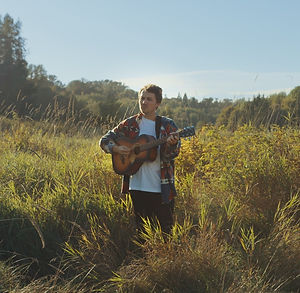
LUKE WALLACE
Singer & Songwriter, Luke's website
Luke is a dynamic, positive musical force in the world. Using his talent as a songwriter, speaker, and choral arranger, he champions environmental causes and builds community wherever he goes. Hailing from the Coast Salish Territory known as Vancouver, Canada, Luke has been on a decade-long journey of touring, recording, and organizing for the betterment of people and the planet. Luke's unique brand of politically charged folk music has earned him a loyal following and a reputation as a modern-day Pete Seeger. From festivals to rallies to venues, Luke's music is a rallying cry for a movement of people rising up to meet the social and environmental challenges of our time. With his latest album, The Dandelion Resistance, Luke continues to push the boundaries of folk music and prove that art can be a powerful tool for change.

Sherry Wildfeuer
Coworker and Elder, Camphill Village Kimberton Hills
Sherry learned biodynamic gardening in New York, California, Switzerland, and England. Since 1973 she has been a coworker at Camphill Village Kimberton Hills, which has grown into a community of 110 people on a 422-acre biodynamic farm in Pennsylvania. It especially includes adults with developmental disabilities, who are engaged in work on the land, in various craft workshops, and in support of life-sharing households.
Sherry co-founded the work of the Agriculture Section of the School for Spiritual Science in the United States, which she continues to co-lead with Alex Tuchman. She was the founding editor of the Stella Natura Biodynamic Planting Calendar, which she produced for 47 years. She teaches and lectures on anthroposophy, the work of Rudolf Steiner, and will be sharing from her experience of over 50 years in intentional community, drawing from the wisdom of the bees as a prophetic model of our human social potential.

JOHANNES WIRZ
Science Section Leader emeritus, Goetheanum
photo © Weleda
After receiving a PhD in Molecular Genetics at the University of Basel, Johannes joined the Research Institute at the Goetheanum in Switzerland, where he ended as co-leader of the Science Section in the last two of many years. In addition, he has been a board member at Germany’s natural beekeeping association, Mellifera e.V., since 2014, where he coordinates bee research projects. Research he’s been involved in includes: treatment-free beekeeping against Varroa; butterfly ecology and the improvement of green lands for pollinators; development of frogs, toads, and newts in their habitats; non-target effects of genetic modification in crop plants; evolution of humans from the perspective of academic and spiritual science; seeds as common goods and their impact for future agriculture.
Johannes aspires to build bridges between academic and Goethean science. As a metaphor, he understands the endeavor of the former to decipher the alphabet, grammar, and syntax of life, and the latter to read and understand life itself. Neither of these two sciences succeeds without the other.

FOOD
Savor Farm-to-Table Cuisine
Chef Adam Morrison of Two Trees Catering is honored to bring you true farm-to-table dining throughout Learning from the Bees, with local, organic, seasonal produce and livestock grown exclusively for the conference. Rooted in Floyd for more than 20 years, Adam and his team craft nourishing meals that celebrate the seasons, the land, and the local growers who make it all possible. With a deep respect for place and a flair for creative flavor, every delicious bite will be a testament to care and community.
Note: Alcohol will not be served.
Included Meals & Optional Delights
Conference registration includes a welcome dinner on Friday, lunches on Saturday and Sunday, and delicious snacks on Saturday and Sunday.
We offer these add-ons to augment your conference experience:
° Hearty farm-to-table breakfasts on Saturday and Sunday
° Outdoor Appalachian BBQ to accompany Saturday evening’s festivities
Note: You can choose your meal options when purchasing a ticket or return to add them up to seven days before the event.

VOLUNTEERING
Putting on a conference like this takes many hands. Would you like to help by becoming a volunteer? Contact Ines Kinchen at ines@spikenardfarm.org.

